
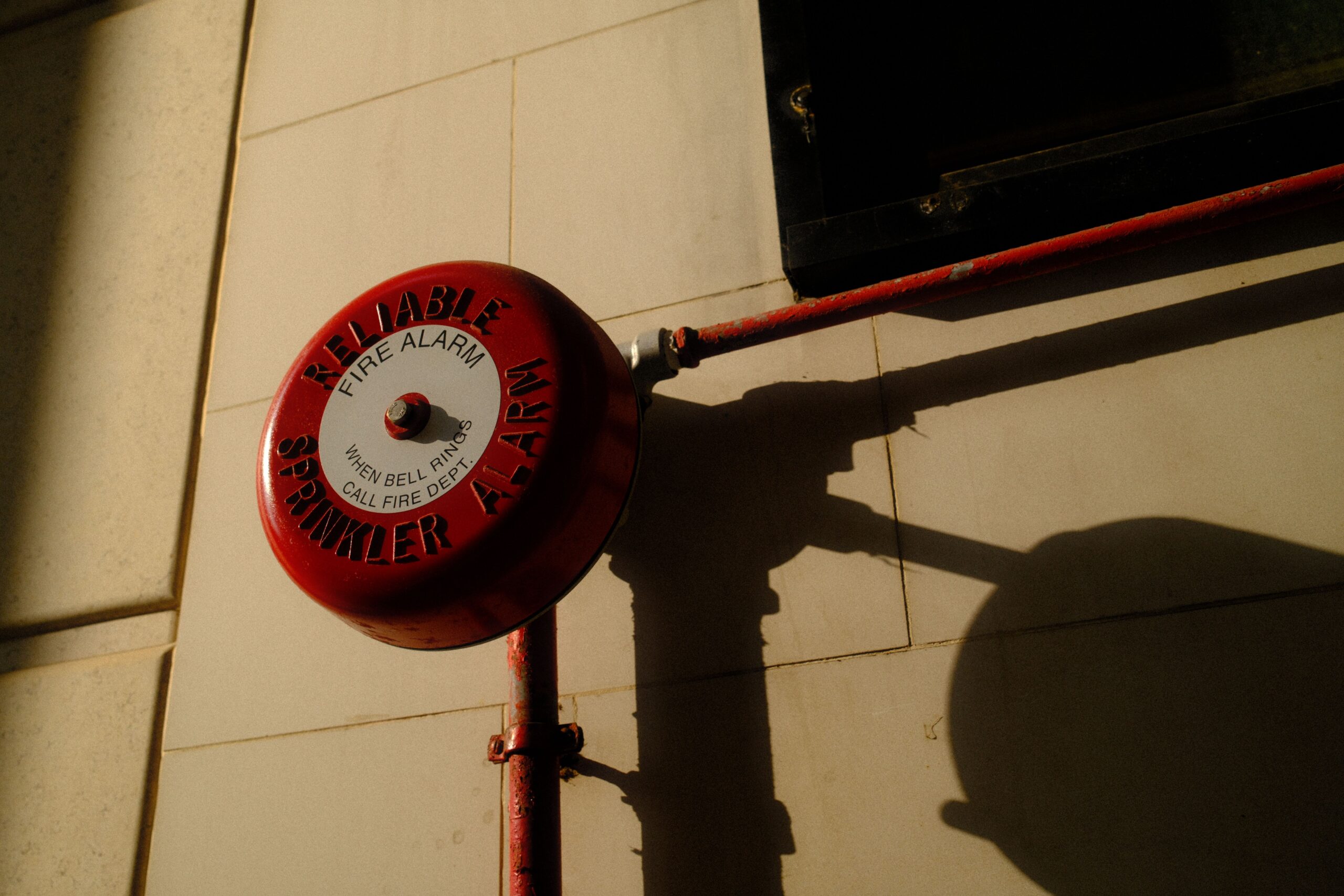
Let’s Talk About the San Francisco Sprinkler Mandate
If you own a condo in an older San Francisco tower, or you are shopping for one, the San Francisco high-rise sprinkler mandate is worth understanding before you make any decisions. It is a city fire code requirement that roughly 126 older residential buildings install automatic fire sprinklers in every unit, and it has caused a lot of worry for the owners in those buildings.
It has also produced a lot of confusing coverage. The deadlines have moved. Cost estimates run from about $15,000 per unit to more than $225,000 per unit depending on the building. Plenty of articles still online cite a 2027 permit deadline that no longer applies, and if you ask an AI chatbot about it, there is a good chance you will get one of those older numbers back.
We get questions about this from clients almost every week, so here is a plain summary of what the rule says, what it may cost, where things stand as of fall 2026, and what it means if you are buying or selling. We also want to say one thing up front, because it comes up constantly: most of San Francisco’s newer highrise condo towers are not covered by this rule at all.
What Is the San Francisco High-Rise Sprinkler Mandate and Which Buildings Does It Cover?
The rule came out of a 2018 fire on the 12th floor of a 22-story residential building in the Financial District. Nobody was hurt, but crews needed close to an hour to knock it down in a building that had no sprinklers, because sprinklers were never required in residential towers of that era. In 2022, the Board of Supervisors adopted an ordinance adding Section 1103.5.4 to the San Francisco Fire Code to close that hole.
The requirement is based on the building, not the year on the permit, though in practice it captures buildings finished before about 1975. Under the current code, an existing residential high-rise has to install an approved automatic sprinkler system if either of the following is true:
- It has an occupied floor more than 120 feet above the lowest level of fire department vehicle access.
- It has occupied floors between 75 and 120 feet above fire department vehicle access and lacks either two interior exit stairways with fire-resistance-rated enclosures, or a compliant fire alarm system with the required smoke detection coverage.
In plain terms, that generally means older buildings of roughly 12 stories or more that do not have two protected interior stairwells. The San Francisco Fire Department counted about 126 buildings that qualify, covering somewhere close to 9,800 homes. About a third of them are co-ops.
The affected buildings are concentrated in a handful of neighborhoods: Nob Hill, Russian Hill, Telegraph Hill, the Marina, Pacific Heights, the Western Addition, and the Tenderloin. The city notified building owners directly rather than publishing a public address list, so if you want to know whether a specific building is on it, the answer comes from the HOA, the property manager, or the Fire Department’s own page on the requirement. We are happy to help you find out on any building you are looking at.
Related reading: Rincon Hill and East Cut Condos, Your Guide to San Francisco’s Premier Highrise Living
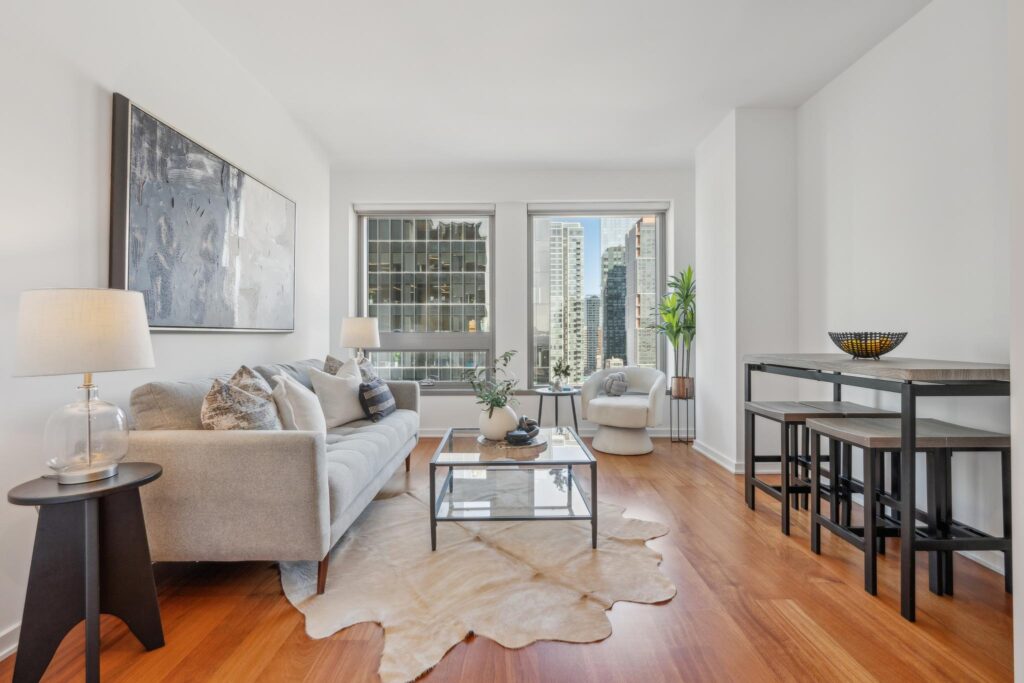
Living room of a San Francisco condo sold by the best highrise agent to buy and sell Robyn Kaufman with SFHIGHRISES.com
How Much Does the Sprinkler Retrofit Cost and What Are the Current Deadlines?
This is where the conversation gets heated, and the honest answer is that the cost depends enormously on the building.
When the ordinance passed, city officials suggested the work might run around $20,000 per unit. Homeowners associations that went out and got bids came back with numbers in the $200,000 to $300,000 per unit range and said the mandate was already hurting their property values. Those two figures are far enough apart that the Board of Supervisors asked its Budget and Legislative Analyst to study the question.
That report came back in August 2026, and it found that both sides were describing something true. The building stock is varied enough that the retrofit could cost roughly $15,000 per unit in buildings that already have usable plumbing capacity, and $225,000 per unit or more in the oldest towers that need entirely new water service, pumps, tanks, and piping run through concrete walls that may contain asbestos or lead paint. Buildings on the steepest hills are among the hardest and most expensive, because getting adequate water pressure to the top floors is its own engineering problem.
So the honest summary is that a low estimate and a high estimate can both be accurate, and the only way to know where a particular building falls is to look at that building.
The current deadlines
The compliance schedule has been extended once already, and the current dates in the fire code are:
- January 1, 2032 for submitting permit drawings and a permit application to the Department of Building Inspection
- January 1, 2034 for installing the sprinkler riser and connecting it to the approved water supply
- January 1, 2035 for completing system piping, sprinkler heads, and electrical monitoring
If you see a 2027 date anywhere, that is the old schedule. The maximum compliance period in the code remains 12 years.
Hardship, waivers, and what may still change
Two other things are worth knowing, because they suggest the rule is not finished evolving.
First, the amended code now says that when the Fire Marshal evaluates a request for undue hardship, financial hardship and the possibility that compliance would displace residents can both be taken into account. That language was not there originally.
Second, the city created a Technical Advisory Council, effective June 1, 2026, to advise the Board of Supervisors, the Mayor, and the Fire Department on alternate compliance methods, waivers, and extensions. It has 11 voting members drawn from property owners, tenants, homeowners associations, design and construction professionals, city agencies, and the Board of Supervisors. Some supervisors have said openly that they want to look at whether other fire safety improvements could satisfy the goal in buildings where full sprinklers are impractical.
There are people on both sides of this making reasonable arguments, and we are not going to tell you which one is right. What we will tell you is that anyone quoting a firm number or a firm outcome today is getting ahead of the process. Owners and buyers in affected buildings should plan for a range of possibilities and keep an eye on what the council recommends.
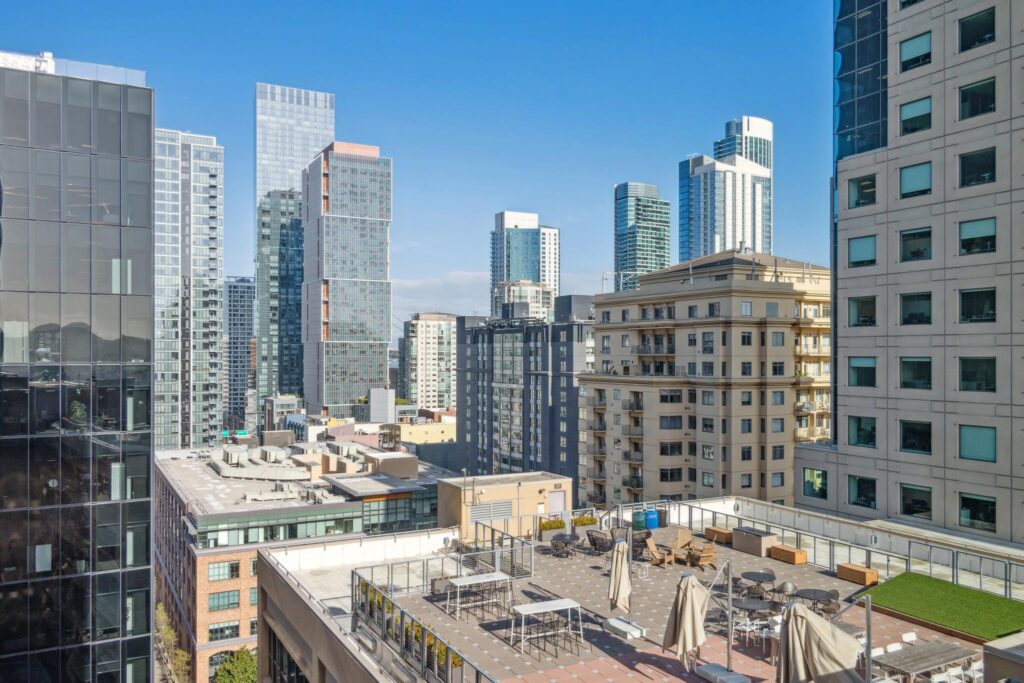
Aerial view of San Francisco highrise condo buildings from One Hawthorne in the South of Market aka SoMa district
What Does the Sprinkler Mandate Mean If You Are Buying or Selling a San Francisco Condo?
Which highrise neighborhoods are affected, and which are not
This is the question we get most often, and for a lot of buyers the answer is a relief.
The newer highrise condo neighborhoods on the east side of the city are almost entirely outside this rule. Mission Bay, South Beach, Rincon Hill and the East Cut, Yerba Buena, and most of SoMa were built well after sprinklers became standard in new residential construction. The towers in those neighborhoods already have full sprinkler systems. Nothing about this mandate applies to them.
Nob Hill is the one neighborhood we work in regularly that sits squarely in the affected zone, along with Russian Hill, the Marina, Telegraph Hill, Pacific Heights, and the Western Addition.
We want to be careful not to oversell this. A newer building being exempt from the sprinkler mandate does not mean it will never face a large special assessment. Every building has systems that age and reserves that either cover the work or do not. Reading the HOA financials matters just as much in a 2010 tower as in a 1965 one. But if part of what worries you about highrise ownership is the possibility of a six-figure assessment you did not see coming, it is fair to say the newer buildings carry less of that specific risk right now.
You can browse the highrise condo buildings we cover and the San Francisco neighborhoods where they sit to get a sense of the age and construction of each one.
Related reading: Mission Bay Condo Buildings, A Guide for San Francisco Homebuyers
If you are buying
The mandate has cooled buyer interest in some affected buildings, which means there are units trading at prices that reflect the uncertainty. That can be an opportunity or a trap depending on how well you understand the specific building.
Before you write an offer on a unit in an older tower, find out:
- Whether the building is subject to Section 1103.5.4 at all
- Whether the HOA has commissioned an engineering study or gotten bids, and what they showed
- What the reserves look like and whether the board has started assessing for the work
- Whether the building is pursuing a hardship request, waiver, or alternate compliance method
- How the seller’s disclosures address the mandate, and whether anything is missing
None of that is exotic. It is the kind of building-level review we do on every transaction anyway, and it is a large part of why working with an agent who knows these buildings matters more here than in most markets. Our buyer resources walk through the rest of the process, and you can start browsing with our property search whenever you are ready.
Related reading: 9 Questions to Ask Before You Choose a Condo Agent in San Francisco
If you own a unit in an affected building
Owners in these buildings are in a hard spot, and we do not want to pretend otherwise. Some are weighing whether to sell now or wait to see what the advisory council recommends, and there is no single right answer.
What we would say is that the decision should be built on your building’s actual situation rather than the headline numbers. A building with usable plumbing capacity and healthy reserves is in a very different position from one facing a full replumb with displacement. If you are trying to figure out what your unit is worth in the current environment, our seller resources are a good starting point, and you can request a complimentary property valuation to get a real read rather than an automated estimate that has no idea this ordinance exists.
Where Things Stand and How to Get a Straight Answer on Your Building
The San Francisco sprinkler mandate is still moving. The deadlines have shifted once, the cost study came back showing an enormous range, and an advisory council is actively working on exemption criteria and alternate compliance paths. Anything you read about it should be checked against the city’s own information before you act on it.
For most buyers looking at San Francisco luxury condos in Mission Bay, South Beach, Rincon Hill, Yerba Buena, and SoMa, this is background information rather than a reason to change course. For owners and buyers in the older towers on Nob Hill and the northern hills, it is worth a careful look at the specific building before any money changes hands.
Robyn Kaufman has spent more than 20 years selling San Francisco highrise condos and knows these buildings at the level this question requires. If you want to know where a particular building stands, or you are trying to decide what to do with a unit you already own, contact us today and we will help you sort it out. You can also see our current SF highrise condos for sale or read more about our work as top San Francisco Realtors for highrise condos.
Related reading: Using AI to Buy a San Francisco Condo, What Works and What Doesn’t