
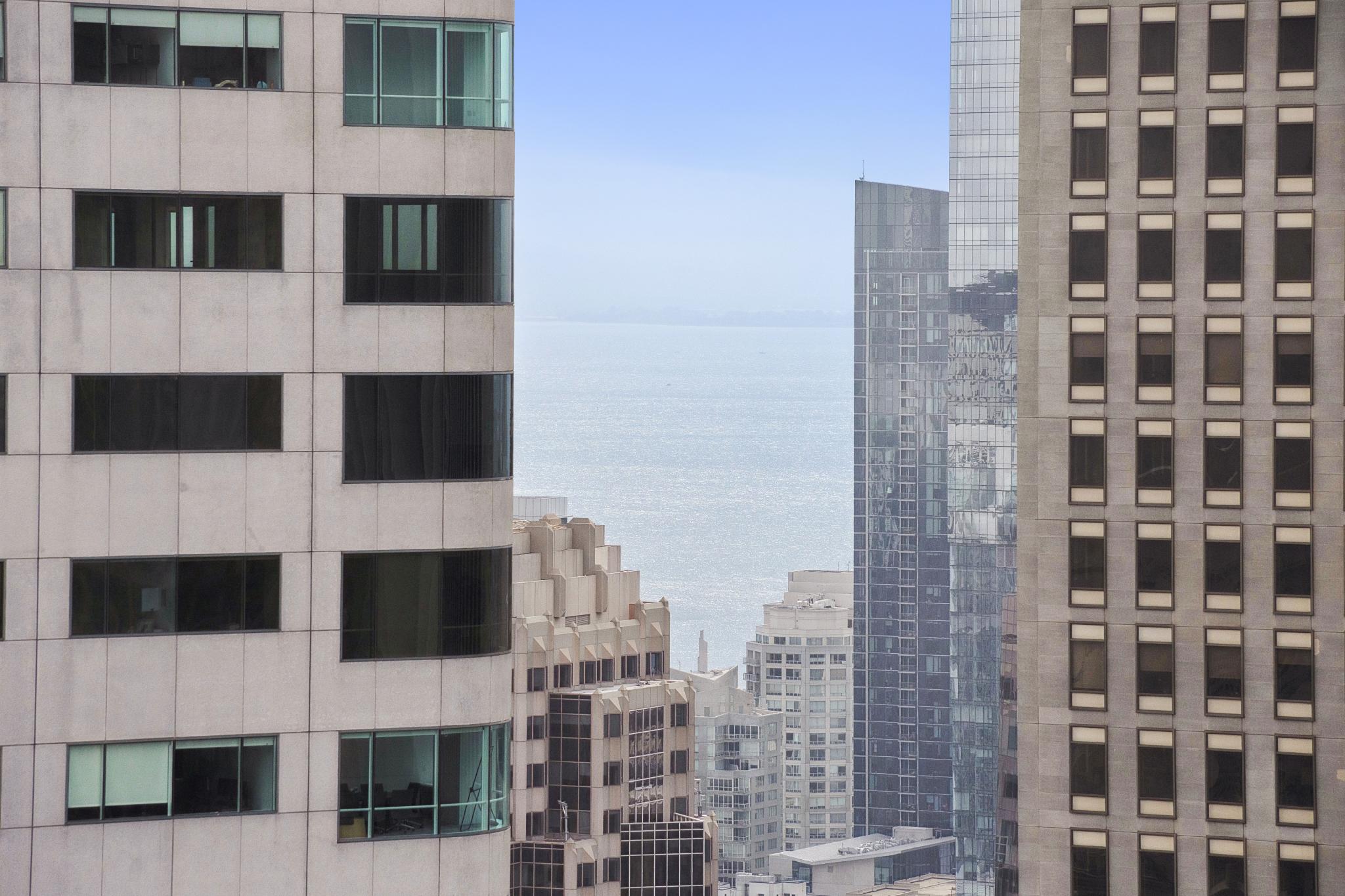
Using AI to buy a San Francisco condo has gone from a novelty to the normal first step, especially here. A NerdWallet survey found that about half of prospective buyers nationwide have used or plan to use AI tools during the buying process, and a Veterans United survey put the number at 59% of respondents. In San Francisco those figures feel low. Many of my clients build with these tools for a living, and a fair number of them work at the AI companies that are currently reshaping the local economy and driving the strongest condo demand we’ve seen in years.
So when a buyer tells me they already ran the numbers on a building with ChatGPT or Claude before calling, I take it seriously. Some of what they bring me is genuinely useful. Some of it is confidently wrong in ways that would cost them a lot of money. As one of the top San Francisco Realtors for highrise condos, I’d rather help you sort out which is which than pretend the tools don’t exist.
Related: San Francisco Real Estate in 2026 Looks Promising for Highrise Condo Buyers
What Is AI Actually Good At During a San Francisco Condo Search?
Quite a lot, and it’s worth being specific instead of vague about it. AI is strongest anywhere the answer is published, stable, and general. That covers more of the early search than most people expect.
Getting oriented before you tour anything. If you’re new to the city or coming from a single-family market, AI can give you a solid first pass on how the highrise neighborhoods differ from each other. South Beach versus Mission Bay versus Rincon Hill versus Yerba Buena is a genuinely confusing distinction from the outside, and a chatbot will explain the basic geography, transit, and character of each one reasonably well. Our San Francisco neighborhoods guide goes deeper, but AI is a fine place to start forming questions.
Translating condo vocabulary. San Francisco highrise transactions come with terminology that trips up even experienced homeowners:
- HOA reserves, reserve studies, and what an underfunded reserve implies
- Special assessments and how they differ from monthly dues
- Rental caps and owner-occupancy ratios, which affect both lending and resale
- Mello-Roos and community facilities district charges, which show up in parts of Mission Bay
- San Francisco’s tiered transfer tax and who customarily pays it
- The difference between a condo, a TIC, and a co-op, which matters enormously for financing
Ask an AI assistant to explain any of these and you’ll get a clear, accurate answer. That’s a good use of the tool.
Making a disclosure package readable. This is where AI earns its keep. A San Francisco condo disclosure package can run several hundred pages of HOA minutes, budgets, reserve studies, CC&Rs, and inspection reports. Feeding that into an AI tool and asking for a summary of pending assessments, litigation, reserve balances, and repeated maintenance complaints in the minutes is a legitimately good workflow. It won’t replace a careful review, but it will tell you where to look and what to ask about.
Keeping a long search organized. Highrise searches drag on. Buyers often watch three or four buildings for months waiting for the right stack and floor to come up. AI is useful for maintaining a running comparison of units you’ve seen, dues, square footage, parking, and your own notes from each showing.
Running the payment math. Property tax, HOA dues, insurance, parking, and financing scenarios all lend themselves to quick modeling. Just remember that the output is only as good as the numbers you feed in.
Drafting the questions you should be asking. Ask AI what to ask a listing agent about a building’s HOA health, or what to ask a lender about condo financing, and you’ll get a strong list. Bring it to your first meeting with an agent. I like it when clients do.

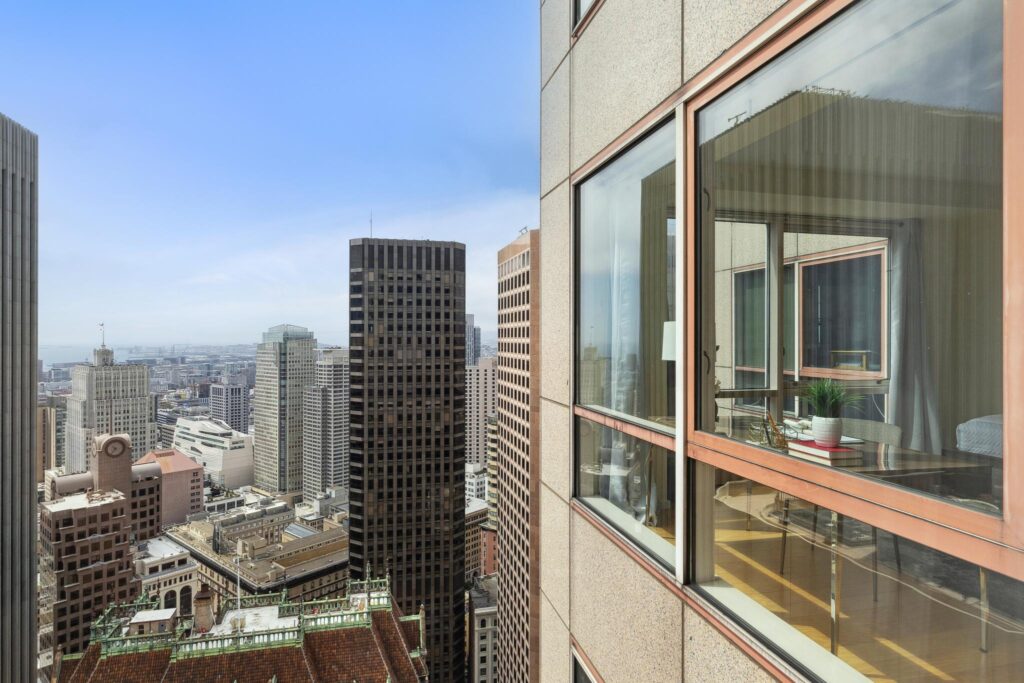
High floor views from a San Francisco luxury condo
Where AI Falls Short in the San Francisco Highrise Condo Market
The limits of using AI to help you buy a San Francisco condo are not due to a lack of its intelligence. They are more about the tool having no access to the information that decides these transactions.
Automated valuations miss the nuance of pricing. An algorithm sees bedrooms, bathrooms, square footage, and building address. It does not see the things that move a San Francisco condo’s value by six figures:
- View and floor. Two units in the same building with identical floor plans can differ by hundreds of thousands of dollars based on the stack, the floor, and whether the view is Bay, city, or the back of the neighboring tower. An AVM treats them as comparables.
- What’s about to block that view. Approved development next door is the single most expensive thing an algorithm cannot know.
- Orientation and light. North-facing units in the same line price differently than south-facing ones, and fog exposure varies block by block.
- Parking. Deeded, leased, valet, tandem, or none at all. Each carries a different value, and public records rarely capture which one a unit has.
- HOA health. A building with thin reserves, active litigation, or a facade repair coming is worth measurably less than its twin down the street. Automated tools don’t price this in until after it shows up in closed sales.
Zillow’s own published median error rate for off-market homes sits around 7%, and accuracy degrades in dense urban condo markets. On a $1.5 million SF condo, a modest percentage is a very large number. Our complimentary property valuation exists for this reason, and any owner thinking about listing should read our resources for sellers before anchoring to an online estimate.
AI only knows what was published. Off-market and coming-soon inventory is invisible to it. In a market this tight, that’s a significant blind spot. A meaningful share of highrise condo sales here start with a conversation between two agents before anything reaches a portal.
Photos lie, and AI can’t tell. Staged, wide-angle, color-corrected listing photos hide sound transfer from the elevator shaft, HVAC noise, an amenity deck that’s been closed for a year, and the difference between a building where the doorman knows every resident and one where the front desk turns over every quarter. Those things determine how much you’ll enjoy living there.
It can’t read the people in the transaction. Whether a seller needs speed or price, which listing agent prices realistically and which one starts high to test the market, how a particular HOA board handles requests. None of that is written down anywhere.
Its picture of San Francisco may be out of date. This one catches sophisticated buyers off guard. AI models trained heavily on 2023 and 2024 coverage absorbed a very gloomy narrative about San Francisco condos, and some tools will still repeat it. The market has moved. Condo transaction volume and pricing have turned upward, the AI hiring boom has pulled high earners back into the city, and in the first half of 2026 more than 140 San Francisco homes sold for at least $1 million above list price, compared with eight in the same stretch of 2025. A buyer working from a stale narrative is going to be shocked by their first competitive offer. You can check current activity yourself on our latest SF highrise condos for sale page.
It doesn’t negotiate, and it can’t move today. When the right unit in the right stack finally lists, the window is measured in hours. AI can’t get you in that afternoon, can’t call the listing agent to find out what terms matter, and can’t structure an offer that wins without simply paying the most.
Related: 3 Common Myths About Buying a San Francisco Condo
Get the best information working with a top SF highrise condo agent.
How Do You Combine AI Research With a Top San Francisco Condo Agent?
The buyers doing this well have settled into a clear division of labor. AI handles research, organization, and explanation. A local agent handles access, judgment, and the negotiation. A few practical habits:
Verify anything property-specific. Use AI freely for how things work in general. Confirm anything about a particular unit, building, or price with someone who has been inside it. A confident answer is not a verified one.
Bring your AI questions to the first meeting. If you’ve generated a list of things to ask about reserves, rental caps, or assessments, send it ahead. A good agent will answer all of it and tell you which questions matter most in that specific building.
Ask AI to summarize, ask your agent to interpret. An AI summary of HOA minutes will tell you a facade repair was discussed. Your agent should be able to tell you whether that repair is already funded, what the last three buildings in the neighborhood paid for similar work, and how it should affect your offer.
Use it to prepare, not to decide. Model the payment scenarios, compare the buildings, learn the vocabulary. Then go see the units. Our resources for buyers and live property search tool are built for that stage.
This is also where two decades of doing one thing shows up. Robyn Kaufman started in San Francisco highrise real estate as a new home sales manager for The Metropolitan when South Beach was still being built, which means she has watched most of these buildings from the ground up, through their first resales, their first assessments, and their first board disputes. She ranks in the top 1.5% of agents nationwide by sales volume and has received the REALTRENDS America’s Best Realtor award, and about 69% of yearly business comes from repeat clients and referrals. She works as a solo lead agent, so clients deal with her directly, backed by a full-time marketing and transaction team and the resources of Side.
Practically, that background matters in two moments. The first is when a unit comes up off-market and a phone call gets you in before it hits the portals. The second is when a building has a problem that hasn’t surfaced in any public document yet, and someone tells you before you write the offer instead of after. No model can do either. You can browse individual San Francisco highrise buildings to see how much variation exists between them.

Find your home with top SF condo agent Robyn Kaufman.
Should You Use AI to Buy a Condo in San Francisco?
Yes, and most people already are. AI has made buyers better informed at the start of the process than they’ve ever been, and that’s a good development. It saves everyone time and produces sharper questions.
What it hasn’t changed is the part of a San Francisco condo purchase that has always been hard. Knowing what a specific unit is worth on a specific floor in a specific building. Hearing about a listing before it’s a listing. Reading a seller. Writing an offer that wins without overpaying. Those still run on relationships and local judgment, and in a market where inventory is scarce and buyers are moving fast, they matter more than they did two years ago.
Use the tools. Then bring what you find to someone who knows the buildings. If you’re ready to talk through your search or find out what your current condo is worth, contact us today.